


Most players think improving at pickleball is about adding something. More power, more spin, or more aggressive shots. But the reality? The biggest leap in your game usually comes from removing mistakes, not adding firepower.
At CORE, we see this pattern constantly: players chasing power, when the real unlock in the control vs power pickleball debate is actually control.
Power Is a Shortcut. Control Is a Skill.
Power gives you immediate feedback. Hit harder, and sometimes you win the point faster. That’s why it’s addictive, but it’s also misleading.
Because power:
- Bails you out occasionally.
- Breaks down under pressure.
- Doesn’t scale as competition improves.
Control, on the other hand, is harder to build, and that’s exactly why it separates players. It shows up when:
- You’re off-balance.
- You’re defending pace.
- You’re deep in a long rally.
Power wins moments, but control wins matches.
The Real Problem: Most Players Build Their Game Backwards
Here’s what typically happens:
- Player wants to improve.
- Player upgrades to a “power pickleball paddle”.
- Player speeds everything up.
- Errors increase.
- Confidence drops.
The intention is right, but the sequence is wrong. You can’t layer power on top of inconsistency and expect better results.
At CORE, we coach the opposite progression: Stability → Control → Then Power. Because once you can control the ball, adding pace is easy. But if you can’t control it, power just magnifies the problem.
Control Isn’t Passive, It’s Pressure
There’s a misconception that control equals soft or defensive play. That’s not how high-level pickleball works.
Control is what allows you to:
- Keep opponents pinned in uncomfortable positions.
- Hit the same shot over and over until they crack.
- Dictate tempo without rushing.
A controlled player isn’t reacting; they’re squeezing the rally. Every extra ball you make forces your opponent to hit one more. And at every level below elite play, that’s where points break.
Where Power Actually Fits
Power isn’t the enemy; it’s just often misused. The best players don’t use power early in rallies. They use it at the right moment.
After:
- A weak return.
- A high dink.
- A stretched opponent.
That’s when power becomes high percentage. Not because you hit harder, but because you earned the right to.
Equipment Is Quietly Deciding This for You
Most players don’t realize their pickleball paddle is shaping their tendencies.
If your pickleball paddle is too reactive, too poppy, or too unforgiving, you're going to:
- Speed up too often.
- Miss more off-center balls.
- Struggle to reset under pressure.
Suddenly, your game starts drifting toward low-percentage aggression, whether you intend it or not.
At CORE, we design pickleball paddles that do the opposite. We prioritize stability through contact, extended dwell time for feel, and forgiveness across the face. Because when your paddle absorbs and controls the pickleball ball better, your decisions get better too.
For players establishing their baseline consistency, the CORE Elevate maximizes forgiveness. If you are looking to perfectly balance the control vs power pickleball equation, the Reaction Pro offers unmatched stability. For elite players who already possess exceptional control and want to dictate pace, the PRO 4G provides high-level performance without sacrificing touch.
Control Starts with a Reliable Ball
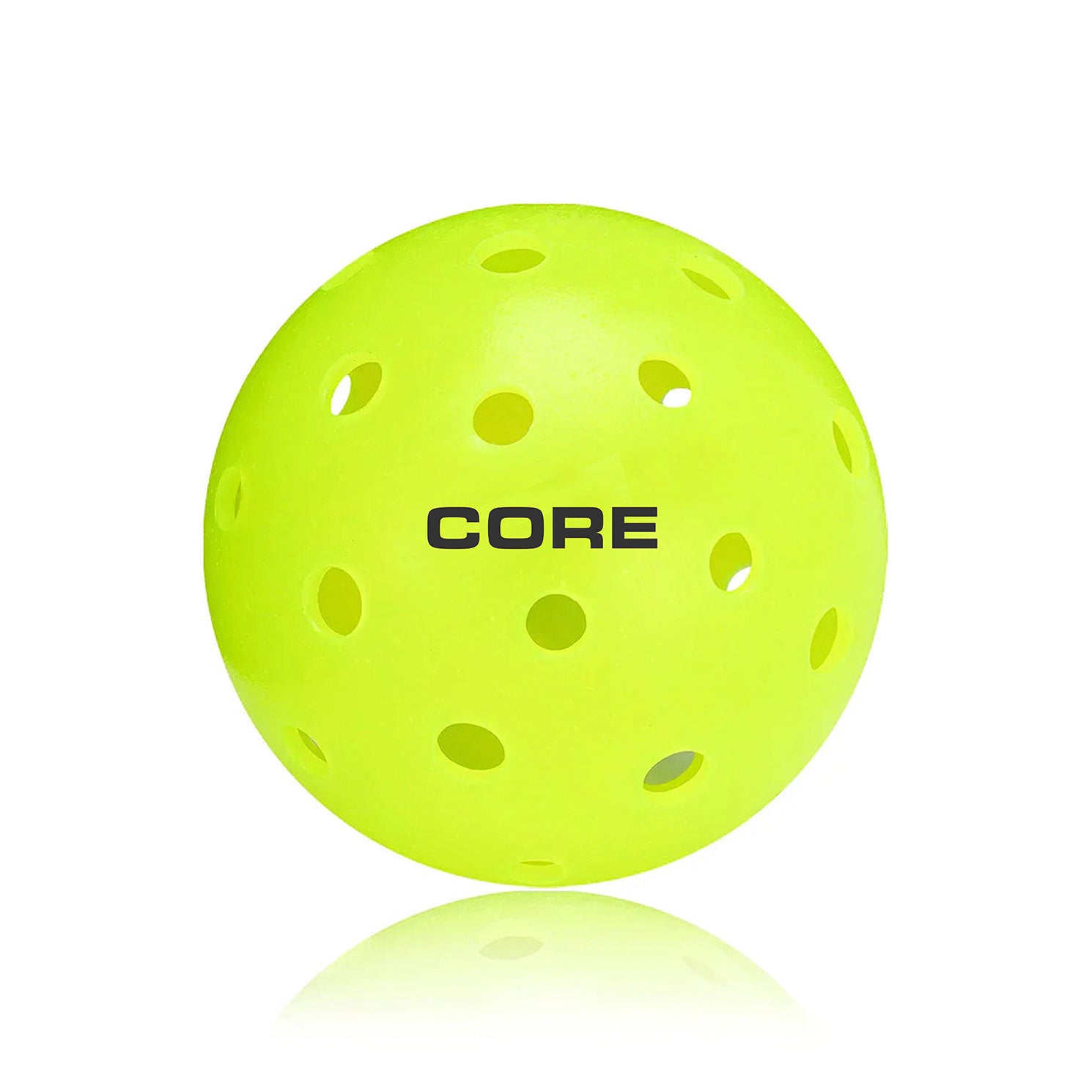
Remember, control isn't just about the paddle you swing; it's also about the ball you strike. Inconsistent balls will ruin your soft game and make resets incredibly frustrating. That's why pairing your setup with premium CORE Pickleballs ensures that every dink, drop, and drive reacts exactly the way you expect it to. Play with a ball that rewards your control, not one that fights against it.
The Shift That Changes Everything
If you want to improve faster, stop asking: “How do I hit this harder?”. Start asking: “Can I hit this the same way 10 times in a row?”.
That single shift changes:
- Your shot selection.
- Your consistency.
- Your confidence under pressure.
And ironically, it’s what eventually unlocks more effective power.
The CORE Perspective
We don’t design for highlight shots. We design for the 90% of the game that actually determines outcomes: returns, drops, dinks, and resets.
Because that’s where control lives. And that’s where matches are decided. Power is easy to sell, but control is what actually makes players better.
Final Takeaway
If your goal is to win more, not just hit harder, the priority in the control vs power pickleball dynamic is clear:
- Build a repeatable, controlled game.
- Choose equipment that increases your margin for error.
- Use power as a finish, not a foundation.
Control isn’t limiting. It’s what gives you access to everything else.