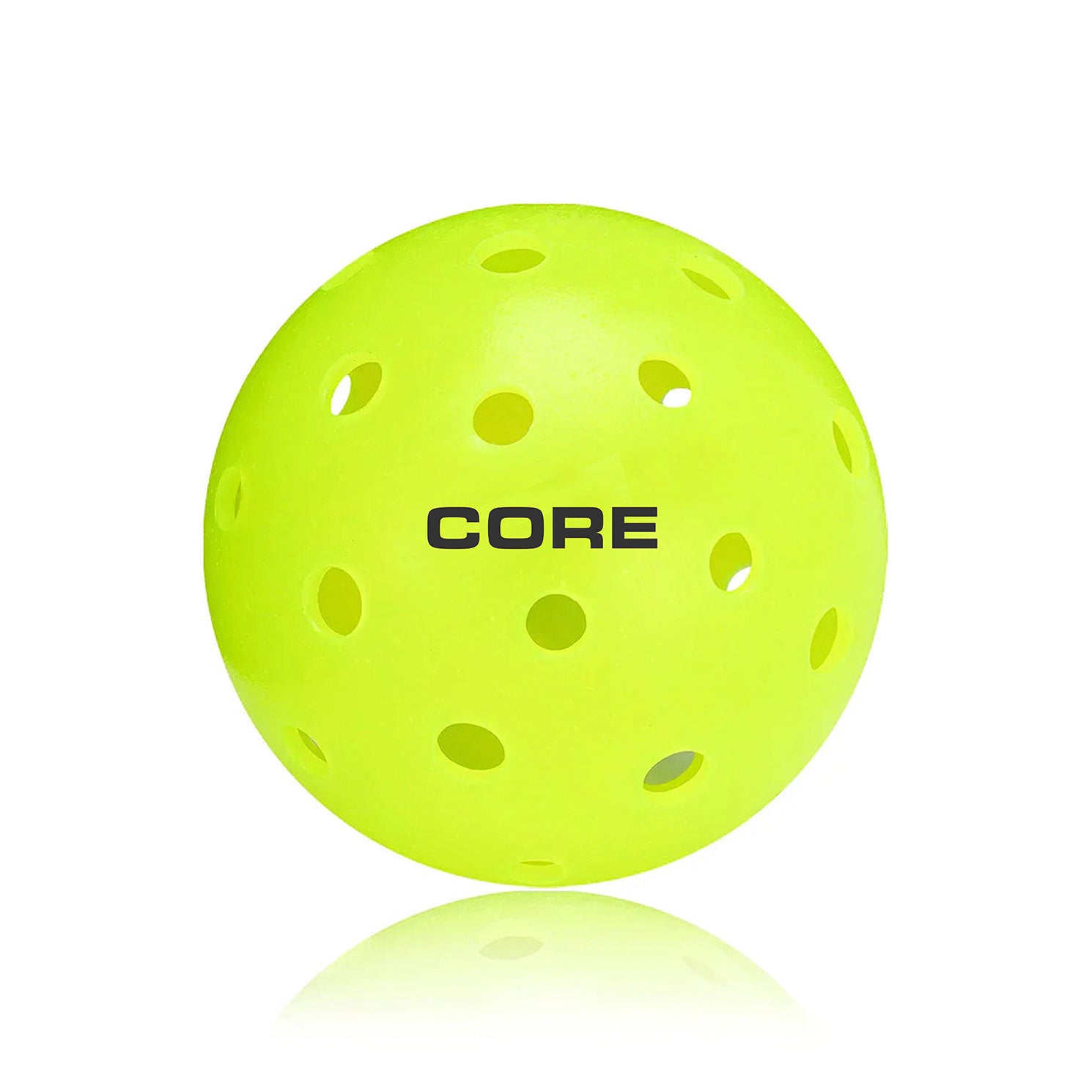



Most players obsess over paddles. But if you want consistent performance, predictable bounce, and reliable spin, your pickleball ball replacement schedule matters just as much. At CORE, we test, play, and engineer equipment with performance longevity in mind. And here’s the truth: A worn ball changes the game more than you think.
Quick Answer: How often should you replace pickleballs?
Recreational players should replace balls every 3–10 sessions, while competitive players often require fresh balls every 1–3 sessions to ensure consistency. Visible cracks, a "dead" feel, or a noticeable drop in bounce height are all definitive signs that it is time for a replacement.
Why Ball Replacement Matters More Than Players Realize
A fresh pickleball ball delivers a true bounce, consistent flight path, and reliable spin response. Conversely, a worn ball can lose bounce, warp slightly, or develop soft spots that lead to inconsistent play. If your shots suddenly lack pop or your dinks aren’t reacting the same, it might be your ball—not your paddle.
How Long Does a Pickleball Last?
While there is no universal number, ball lifespan depends heavily on your environment and level of play:
| Playing Condition | Typical Lifespan |
|---|---|
| Recreational Play | 3–10 sessions |
| Competitive Play | 1–3 sessions |
| Cold Weather Play | May crack within 1 session |
| Hot Weather Play | Variable (accelerated softening) |
Meet the CORE Pickleball Lineup
We’ve developed a range of pickleball balls designed for different playing conditions and performance needs:
- CORE PRO Performance Ball: Designed for competitive outdoor play with durable, high-impact plastic and precision-drilled holes for balanced flight. Best for tournament-style intensity.
- CORE Indoor Control Ball: Features a softer construction and larger hole pattern to provide a controlled bounce on gym floors. Best for rec leagues and community centers.
- CORE Pink Edition Ball: Built to the same high outdoor standards as our PRO lineup but with a high-visibility color for players who want style and performance.
Signs It’s Time to Replace Your Pickleball Ball
Experienced players monitor their equipment proactively. Look for these red flags:
- Visible hairline fractures or cracks.
- The ball feels “dead” or soft to the touch.
- A lower bounce than usual on standard court surfaces.
- An out-of-round wobble when the ball is rolled.
- Inconsistent flight paths in calm wind conditions.
What Impacts Ball Lifespan?
Several variables determine how quickly you’ll need a replacement:
- Court Surface: Concrete and asphalt wear balls down faster than smooth indoor courts.
- Temperature: Cold weather increases cracking risk, while heat accelerates softening.
- Power Level: Hard hitters naturally shorten a ball’s lifespan.
- Storage: Leaving balls in a hot car can dramatically reduce their performance longevity.
Pro Tip: Keep a Rotation System
To extend performance, mark balls with a small dot and rotate practice balls. Separate your "league night" balls from your drill balls, and always retire cracked balls immediately to ensure every rally starts with reliable performance.

Angel Morales is the Chief Product Officer at CORE Athletics and an internationally competitive pickleball player. He competes in tournaments around the world and works closely with many of the sport’s top professional athletes. With firsthand experience at the highest levels of play, Angel brings deep technical insight into paddle innovation, materials, cores, surfaces, and player needs, helping shape CORE Athletics products for athletes of all skill levels.